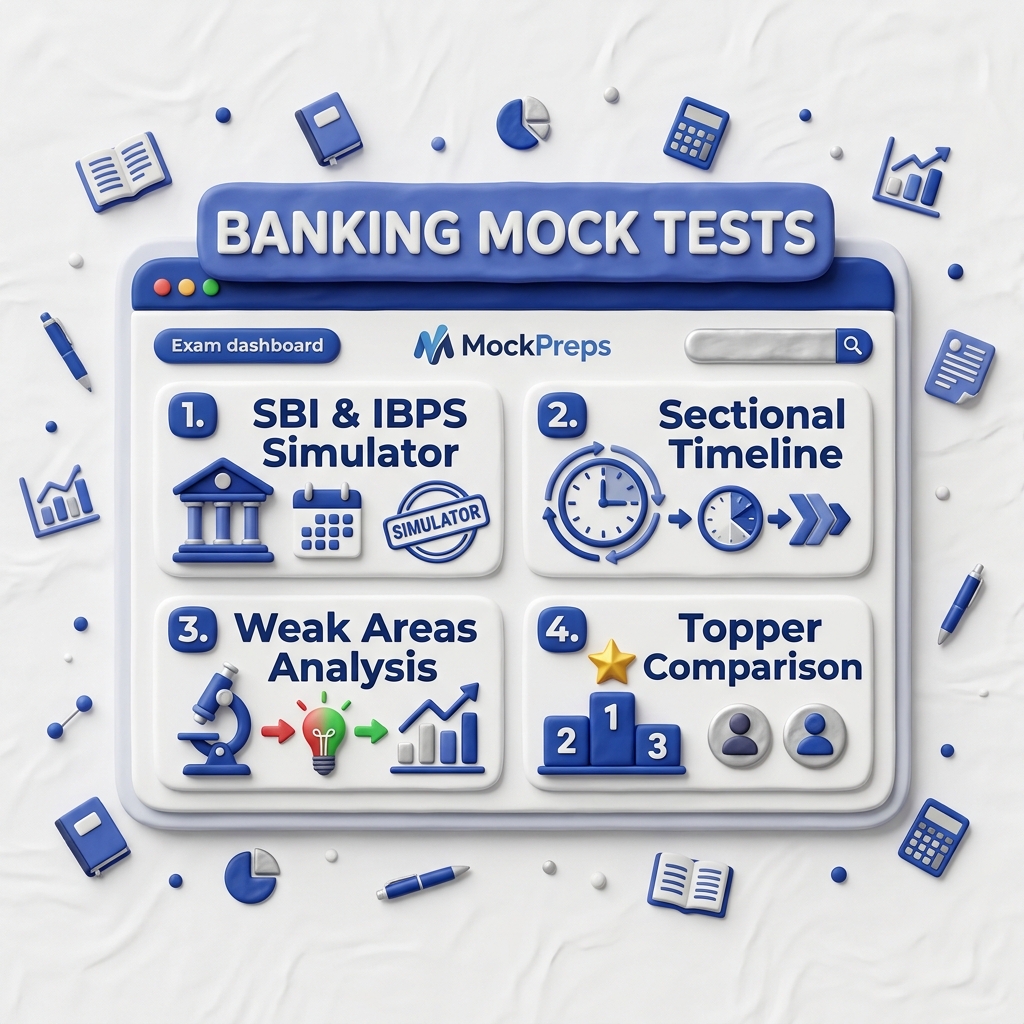
Mastering the Union Bank of India SO Online Exam
The Union Bank of India (UBI) Specialist Officer (SO) exam is a high-stakes challenge that requires more than just subject knowledge. Success in competitive banking exams is often determined by how efficiently a candidate manages their time. With a fixed duration and a large number of questions, the pressure can be immense. This guide outlines the essential time management strategies to help you navigate the UBI SO online exam with confidence.
1. Understand the Exam Pattern
Before diving into time management, you must thoroughly understand the UBI SO exam structure. Knowing the number of questions, marks per section, and the negative marking policy is the first step. Typically, the exam includes sections like Professional Knowledge, Reasoning, Quantitative Aptitude, and English Language. Recognizing which section carries the maximum weightage will allow you to prioritize your time effectively.
2. The 'Round' Strategy
One of the most effective ways to manage time during an online exam is to adopt the 'Three-Round Strategy':
- Round 1 (The Easy Wins): Scan the entire paper quickly. Attempt questions that you can solve in under 30 seconds. Do not get stuck on any single question.
- Round 2 (The Calculations): Return to the questions that require moderate effort or calculations. Focus on accuracy here.
- Round 3 (The Challenges): Use the remaining time to tackle the most difficult or time-consuming questions. If you are unsure, it is better to skip these to avoid negative marking.
3. Prioritize Professional Knowledge
For UBI SO candidates, the Professional Knowledge section is the decider. Since this section often carries the most marks, it should receive the largest portion of your time. However, do not neglect the qualifying sections. Allocate specific time blocks for each, and stick to them strictly. If you find yourself spending more than the allocated time on a single problem, move on immediately.
4. The Power of Mock Tests
Mock tests are not just for checking your knowledge; they are your training ground for time management. When taking a mock test:
- Use a Timer: Ensure you are working under the exact time constraints of the real exam.
- Analyze Your Performance: Identify which sections take you the longest. Is it Data Interpretation? Is it Puzzles? Once identified, practice those specific areas to increase your speed.
- Simulate Exam Conditions: Sit in a quiet room, avoid distractions, and treat the mock as the real UBI SO exam.
5. Skip and Revisit
A common mistake students make is spending too much time on a single 'tough' question. In a competitive exam, every question carries the same weightage. If a question is taking too long, mark it for review and move to the next one. This prevents you from missing out on easier questions that appear later in the paper.
6. Improving Speed and Accuracy
Speed without accuracy is counterproductive due to negative marking. To balance both:
- Use Shortcuts: Learn squares, cubes, and tables to speed up Quantitative Aptitude.
- Practice Reading: Improve your reading speed for English comprehension to save time.
- Review Regularly: Frequent revision reduces the time taken to recall information, allowing you to solve questions faster.
By implementing these strategies, you can transform your approach to the UBI SO exam. Consistency in your practice and a disciplined approach to time allocation during the actual test will significantly boost your chances of clearing the cutoff and securing your position as a Specialist Officer.
Frequently Asked Questions
Unlock MockPreps Pass Pro
Get direct access to the ultimate testing platform trusted by toppers. Upgrade to unlock full-length tests, detailed performance metrics, and smart tracking.
60,000+ Tests
Full mock series for all major exams.
Live Sessions
Compete with real-time test takers.
AI Speed Analytics
Pinpoint speed leaks & pacing guidelines.
Free Re-attempts
Perfect your accuracy via practice.
Popular Mock Test Series

SSC CGL Exam

Delhi Police Constable Exam

SSC CHSL Exam

SSC MTS Exam

Delhi Police Head Constable Exam

SSC CPO Exam