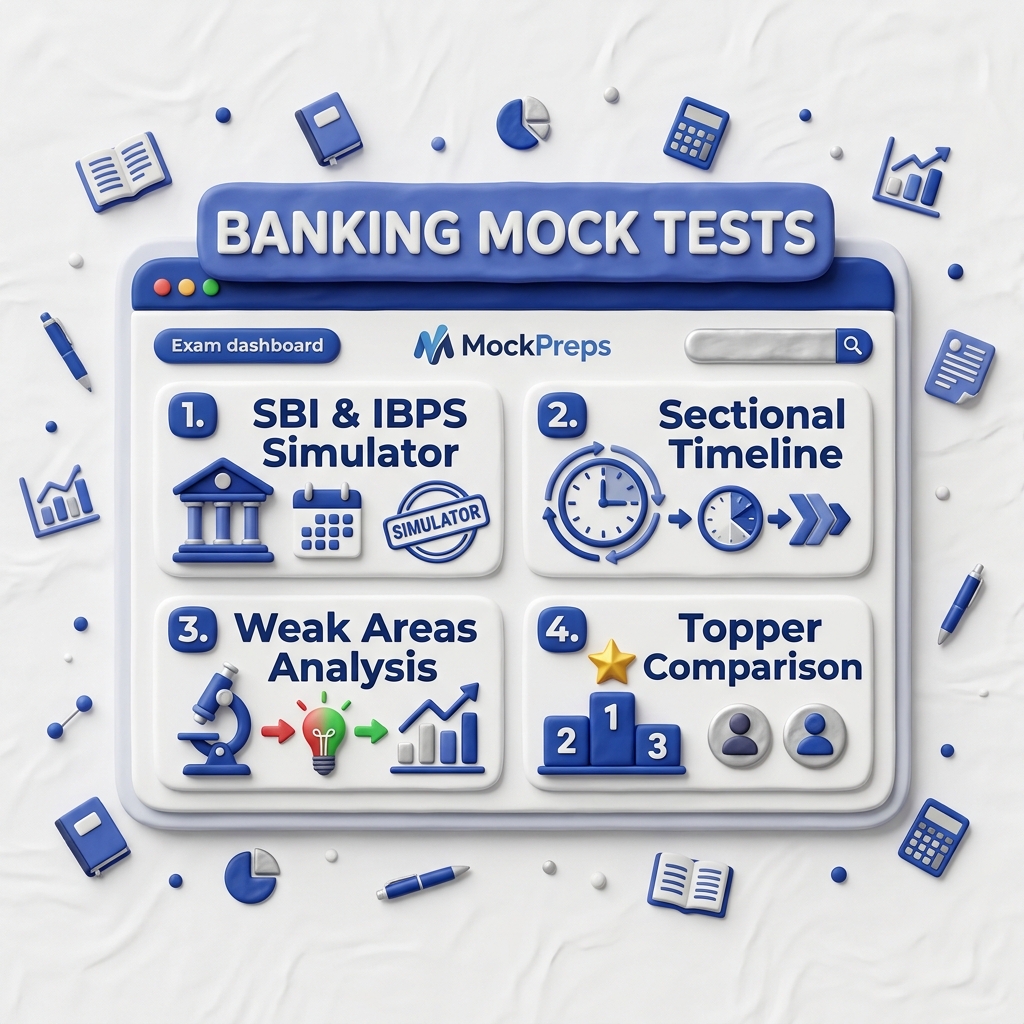
Introduction to Banking Awareness for Akola Urban Bank
Preparing for the Relationship Manager position at Akola Urban Bank requires a deep understanding of both general banking principles and the specific operational framework of cooperative banks in India. As a Relationship Manager, you are the face of the bank, bridging the gap between complex financial products and the diverse needs of your customers. This guide outlines the top 10 banking awareness topics you must master to excel in your upcoming examination.
1. Structure of Cooperative Banking in India
Unlike commercial banks, cooperative banks are organized on a cooperative basis and are registered under the Cooperative Societies Act. Understanding the three-tier structure—Primary Agricultural Credit Societies (PACS), District Central Cooperative Banks (DCCBs), and State Cooperative Banks (StCBs)—is essential. Akola Urban Bank, being an urban cooperative bank, operates under the dual regulation of the Registrar of Cooperative Societies and the Reserve Bank of India (RBI).
2. Functions and Role of the Reserve Bank of India (RBI)
The RBI is the central regulatory authority. For an exam candidate, it is crucial to know the RBI's functions, including:
- Monetary policy formulation (Repo Rate, Reverse Repo Rate, CRR, SLR).
- Issuance of currency.
- Regulation of the payment and settlement systems.
- Supervision of Urban Cooperative Banks (UCBs).
3. Digital Banking and Payment Systems
In the modern banking landscape, digital literacy is non-negotiable. You should have a thorough knowledge of:
- NEFT, RTGS, and IMPS mechanisms.
- Unified Payments Interface (UPI) and its transaction limits.
- The role of the National Payments Corporation of India (NPCI).
- Digital wallets and mobile banking security protocols.
4. Priority Sector Lending (PSL)
Cooperative banks have specific mandates regarding Priority Sector Lending. You must understand the targets and sub-targets set by the RBI for lending to agriculture, MSMEs, education, and housing. This is vital for a Relationship Manager, as managing these loan portfolios constitutes a significant portion of the job.
5. Know Your Customer (KYC) and Anti-Money Laundering (AML)
KYC is the bedrock of banking security. Review the latest RBI guidelines on Customer Due Diligence (CDD), the importance of the Prevention of Money Laundering Act (PMLA), and the documentation required for different types of accounts (Individual, HUF, Partnership, Corporate).
6. Financial Inclusion Schemes
The government's push for financial inclusion is a hot topic for competitive exams. Familiarize yourself with:
- Pradhan Mantri Jan Dhan Yojana (PMJDY).
- Pradhan Mantri Suraksha Bima Yojana (PMSBY).
- Pradhan Mantri Jeevan Jyoti Bima Yojana (PMJJBY).
- Atal Pension Yojana (APY).
7. Basics of Loan Products and Credit Appraisal
A Relationship Manager must understand how banks assess creditworthiness. Study the concepts of CIBIL scores, collateral-based vs. clean loans, debt-to-income ratios, and the stages of loan recovery (NPA categorization: Sub-standard, Doubtful, and Loss assets).
8. Negotiable Instruments Act, 1881
Understanding the legal framework governing banking instruments is critical. Focus on the definitions and rules regarding:
- Cheques (types, crossing, and dishonor).
- Promissory notes.
- Bills of exchange.
- The legal implications of cheque bounce cases under Section 138.
9. Capital Adequacy and Basel Norms
While UCBs have their own capital requirements, having a basic understanding of Basel III norms—specifically regarding Tier 1 and Tier 2 capital—demonstrates a higher level of professional competence during the interview and written stages.
10. Current Financial Affairs and Banking Trends
The banking sector evolves rapidly. Keep track of recent mergers, changes in interest rate structures, RBI circulars affecting urban banks, and the general economic outlook of the Maharashtra region. Reading financial dailies and the RBI's 'Financial Stability Report' will give you a competitive edge.
Conclusion
Success in the Akola Urban Bank Relationship Manager exam is not just about memorizing facts; it is about understanding how these concepts apply to daily banking operations. By focusing on these ten areas, you will build a solid foundation that will serve you well in both the written exam and the subsequent interview process. Stay consistent, practice mock tests, and maintain a keen interest in the evolving world of finance.
Frequently Asked Questions
Unlock MockPreps Pass Pro
Get direct access to the ultimate testing platform trusted by toppers. Upgrade to unlock full-length tests, detailed performance metrics, and smart tracking.
60,000+ Tests
Full mock series for all major exams.
Live Sessions
Compete with real-time test takers.
AI Speed Analytics
Pinpoint speed leaks & pacing guidelines.
Free Re-attempts
Perfect your accuracy via practice.
Popular Mock Test Series

SSC CGL Exam

Delhi Police Constable Exam

SSC CHSL Exam

SSC MTS Exam

Delhi Police Head Constable Exam

SSC CPO Exam