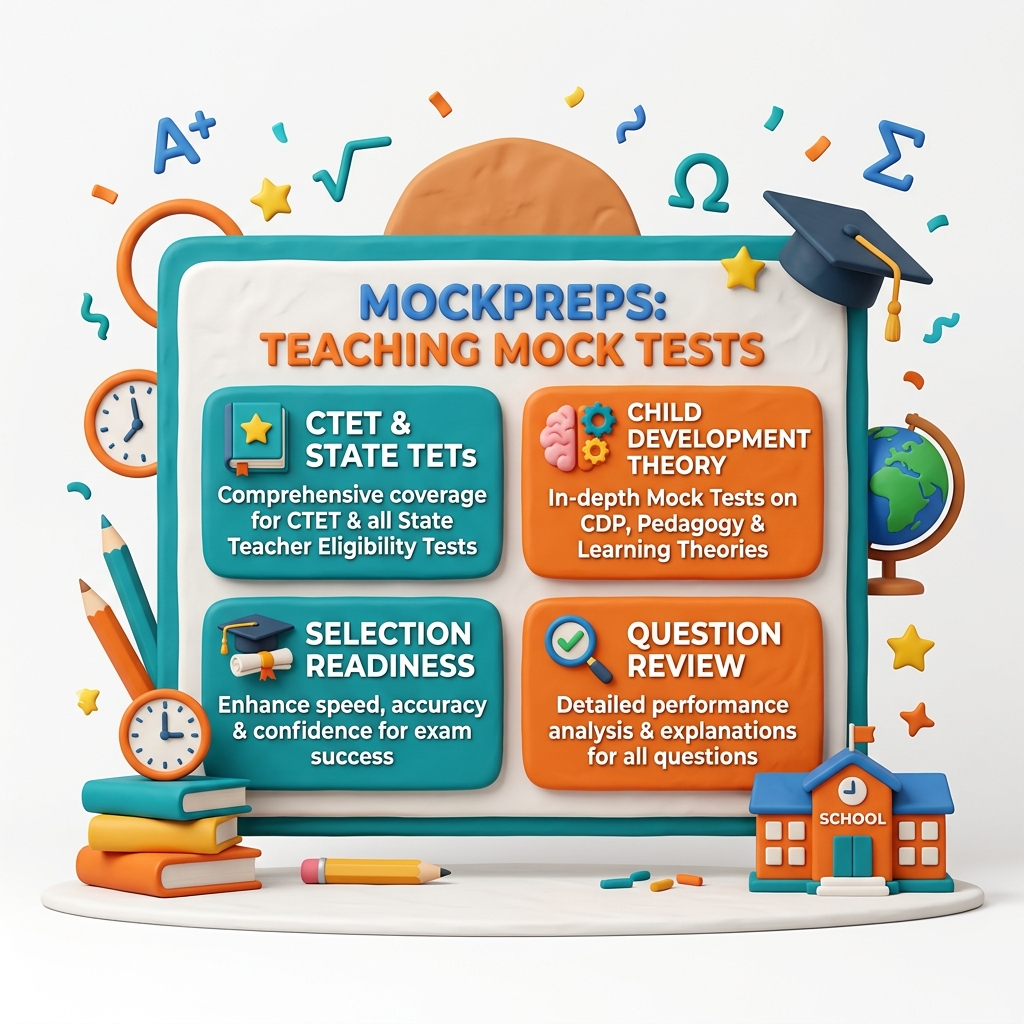
Introduction to CDP in Chhattisgarh Teacher Recruitment
The Chhattisgarh Teacher Recruitment exam, conducted by the Chhattisgarh Professional Examination Board (CG Vyapam), is one of the most competitive exams for aspiring educators in the state. Among the various sections, Child Development and Pedagogy (CDP) stands out as the most critical. It is not just a subject but a lens through which a teacher understands the classroom environment, student behavior, and the learning process. Mastering CDP is essential for scoring high and securing a position as an Assistant Teacher or Teacher in Chhattisgarh's government schools.
Understanding the Syllabus: The Foundation of Success
Before diving into textbooks, it is imperative to understand the scope of the CDP syllabus as defined by CG Vyapam. The syllabus is generally divided into three major dimensions:
- Child Development: Focuses on the physical, cognitive, social, and emotional growth of children.
- Inclusive Education: Understanding children with special needs and diverse backgrounds.
- Learning and Pedagogy: How children think and learn, and the strategies teachers use to facilitate this process.
Core Concepts of Child Development
Child development is a continuous process that begins from conception and lasts throughout life. For the Chhattisgarh Teacher Recruitment exam, focus on the following areas:
1. Principles of Development
Development follows specific patterns such as Cephalocaudal (head to toe) and Proximodistal (center to extremities). Understanding that development is a product of both heredity and environment is a recurring theme in exam questions.
2. Major Theories of Development
You cannot master CDP without a deep dive into the following theorists:
- Jean Piaget: His four stages of cognitive development (Sensory-motor, Pre-operational, Concrete operational, and Formal operational) are frequently tested.
- Lev Vygotsky: Focus on his concepts of the Zone of Proximal Development (ZPD) and Scaffolding. Vygotsky emphasizes the role of social interaction and culture in learning.
- Lawrence Kohlberg: His theory of Moral Development explains how children develop a sense of right and wrong through various levels and stages.
- Erik Erikson: His psychosocial stages help in understanding the emotional crises children face at different ages.
The Significance of Inclusive Education
Inclusive education is a cornerstone of modern Indian pedagogy. In the context of Chhattisgarh, where classrooms are often diverse in terms of language, culture, and socio-economic status, this section is vital. Candidates must understand:
- Addressing Diverse Learners: Strategies for teaching children from marginalized communities, linguistic minorities, and gifted students.
- Special Needs (CWSN): Understanding disabilities such as Dyslexia, Dysgraphia, and ADHD. The goal is to provide an equitable learning environment for every child.
- Right to Education (RTE) Act 2009: Familiarize yourself with the legal frameworks that mandate free and compulsory education and prohibit discrimination.
Pedagogical Concerns and Learning Processes
Pedagogy is the 'how' of teaching. It involves the methods, activities, and assessments a teacher uses. To excel in this section, focus on:
1. Constructivism
Modern pedagogy moves away from rote memorization toward constructivism, where the student is an active participant in creating knowledge. Understand the '5E' model: Engage, Explore, Explain, Elaborate, and Evaluate.
2. Motivation and Learning
Distinguish between intrinsic and extrinsic motivation. Understand how a teacher's feedback and the classroom climate can influence a student's drive to learn.
3. Assessment and Evaluation
The shift from traditional exams to Continuous and Comprehensive Evaluation (CCE) is a major topic. Learn the difference between Formative Assessment (for learning) and Summative Assessment (of learning). Diagnostic and remedial teaching are also key concepts for the CG Vyapam exam.
Subject-Specific Pedagogy
While general CDP covers the basics, the Chhattisgarh Teacher Recruitment exam also tests your ability to apply these principles to specific subjects like Language, Mathematics, and Environmental Studies (EVS). For instance, in Math pedagogy, the focus is on the mathematization of the child's thought process, whereas in Language pedagogy, the emphasis is on the four skills: Listening, Speaking, Reading, and Writing (LSRW).
Effective Preparation Strategy for CG Teacher CDP
To score 25+ out of 30 in the CDP section, follow this structured approach:
- Study the NCF 2005: The National Curriculum Framework is the guiding document for all pedagogical questions. It emphasizes child-centered education.
- Analyze Previous Year Papers: CG Vyapam often repeats themes. Solving papers from 2019, 2023, and previous CG TET exams will give you an edge.
- Make Concise Notes: Create a table for different theories, their stages, and key features. This will help in quick revision during the final days.
- Practice Mock Tests: Time management is crucial. Practicing in a timed environment helps reduce exam-day anxiety.
- Focus on Keywords: In pedagogy questions, look for positive keywords like 'encouragement,' 'active participation,' and 'discovery,' while avoiding negative ones like 'punishment,' 'rote learning,' or 'segregation.'
Conclusion
Mastering Child Development and Pedagogy is not just about passing the Chhattisgarh Teacher Recruitment exam; it is about becoming a better educator. By understanding how a child thinks and grows, you can create a classroom environment that fosters curiosity and success. Stay consistent with your preparation, focus on conceptual clarity rather than memorization, and you will find yourself well on the way to a successful teaching career in Chhattisgarh.
Frequently Asked Questions
Unlock MockPreps Pass Pro
Get direct access to the ultimate testing platform trusted by toppers. Upgrade to unlock full-length tests, detailed performance metrics, and smart tracking.
60,000+ Tests
Full mock series for all major exams.
Live Sessions
Compete with real-time test takers.
AI Speed Analytics
Pinpoint speed leaks & pacing guidelines.
Free Re-attempts
Perfect your accuracy via practice.
Popular Mock Test Series

SSC CGL Exam

Delhi Police Constable Exam

SSC CHSL Exam

SSC MTS Exam

Delhi Police Head Constable Exam

SSC CPO Exam